July 17, 2026
Who Carries the Woman, Who Carries Everyone?
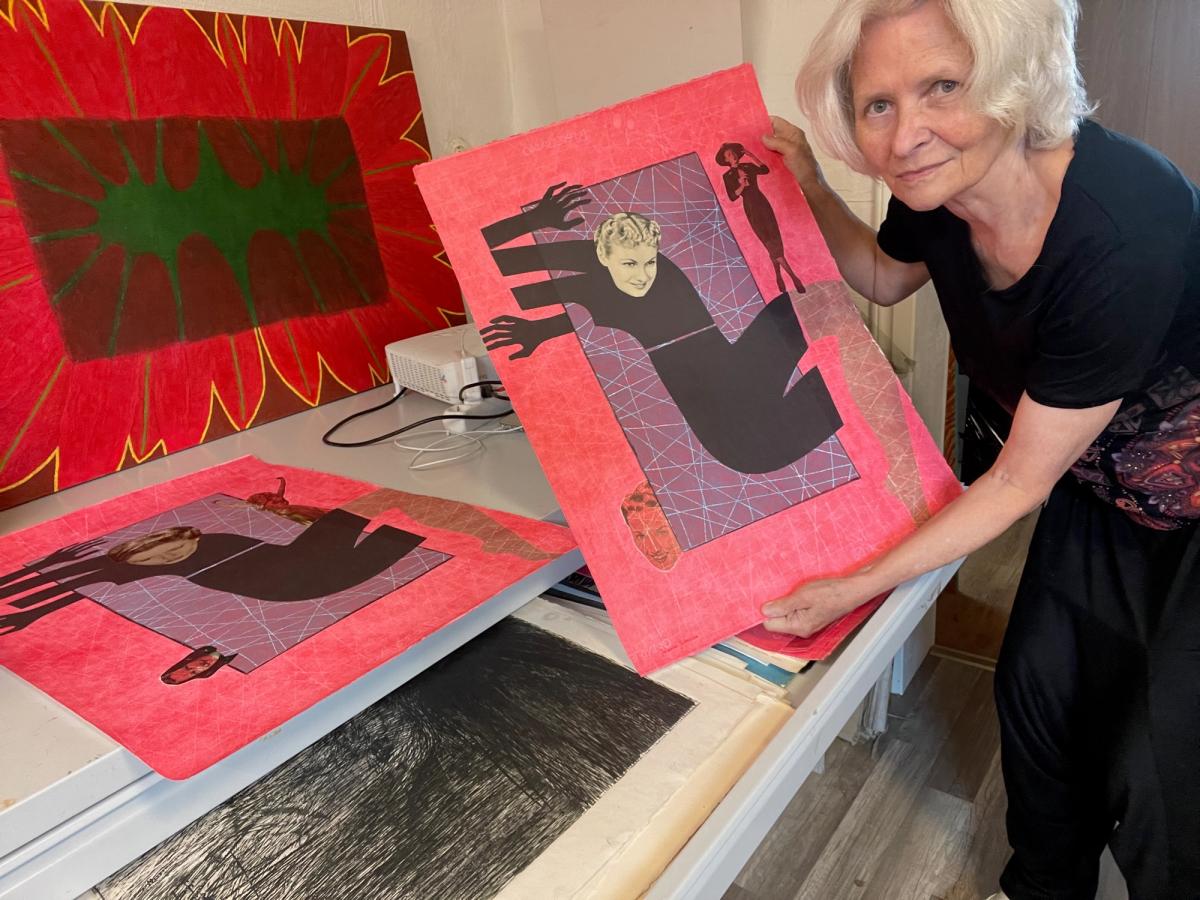
On fragility, multitasking, and the body that holds everything — the story behind nine collage monotypes.
There is a word we reach for when we want to say the highest thing about a woman. Not beautiful, not accomplished, not kind — though we mean all of those. We say: superwoman.
I have been thinking about that word for a long time.
It came to me first through old illustrated magazines from the 1920s — images of women I collected over years, drawn to something in them I couldn't quite name. The women in those pages were elegant, composed, endlessly capable. They managed households and appearances and other people's needs with a serenity that looked, from the outside, entirely effortless. The word superwoman was already in use then, already praise, already a weight.
A century has passed. The word is still with us, and so is the weight.
When I began this series, I didn't start with the title. I started with the body.
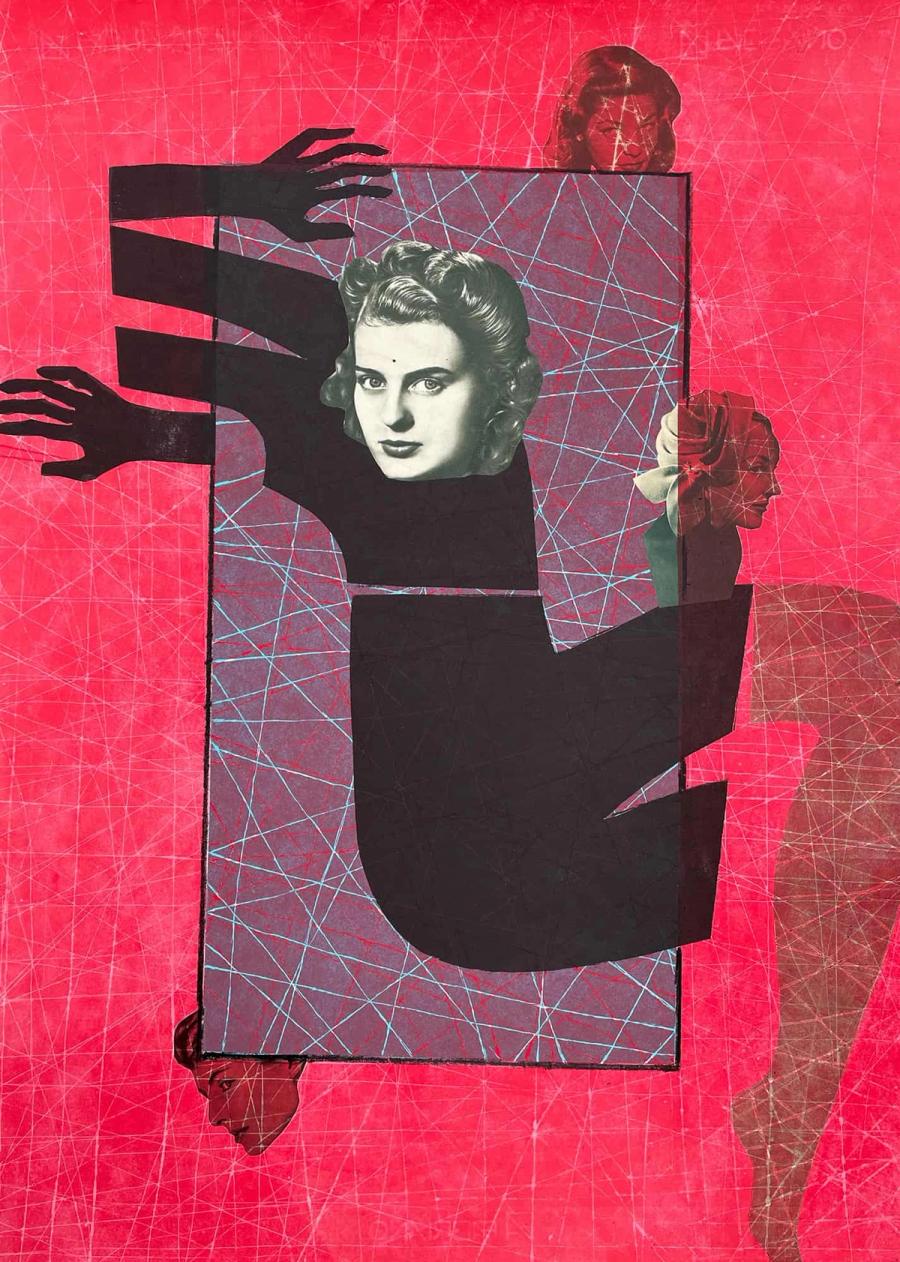
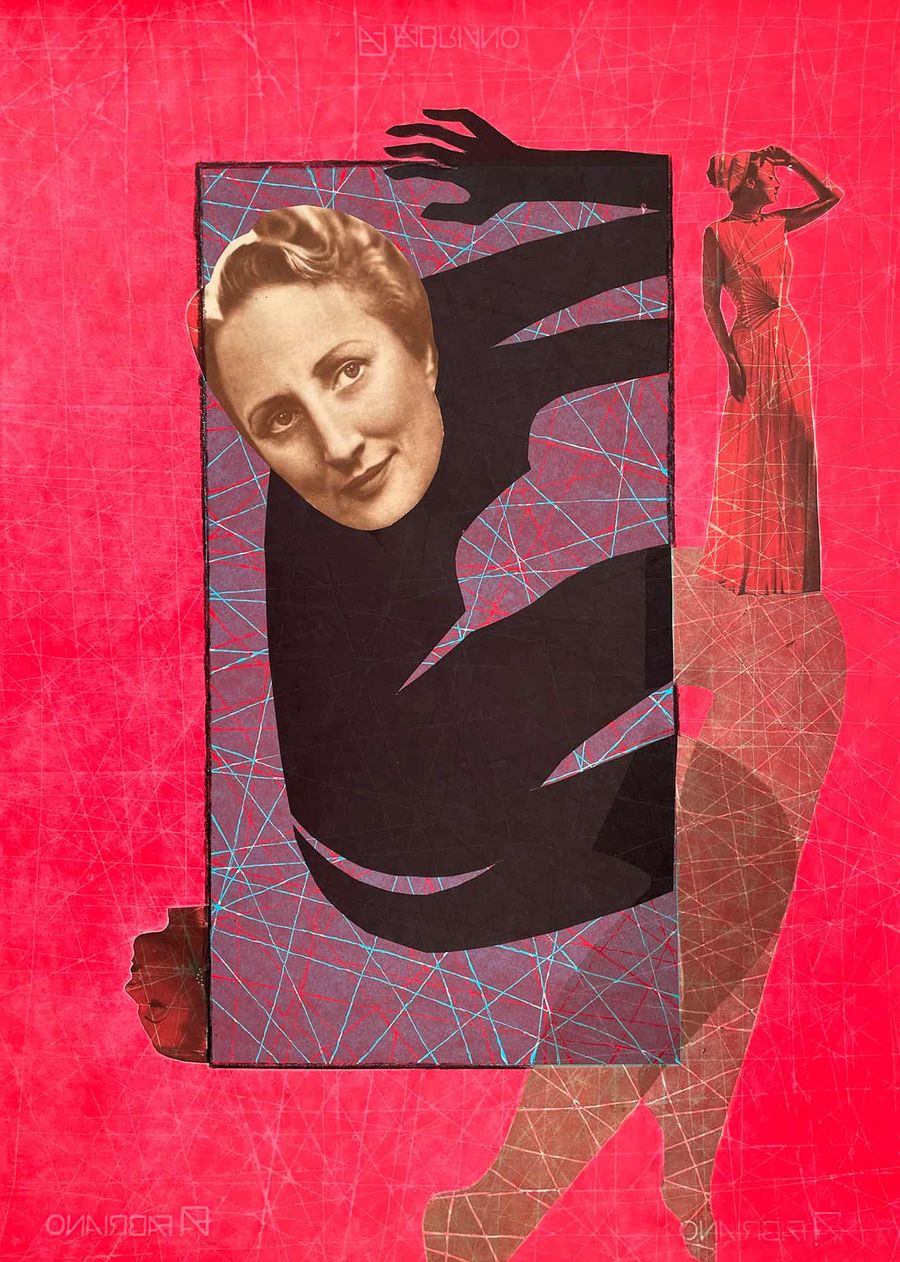
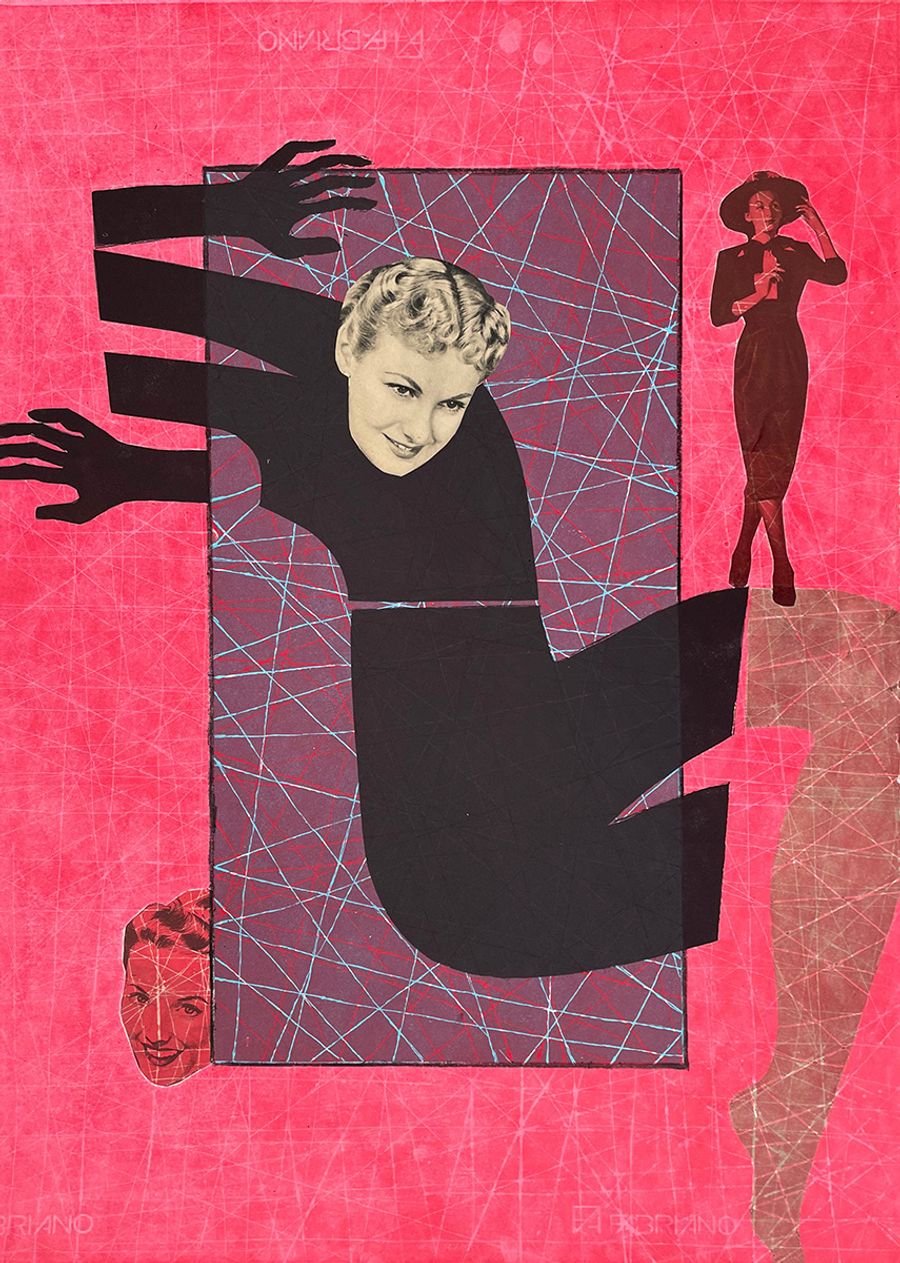
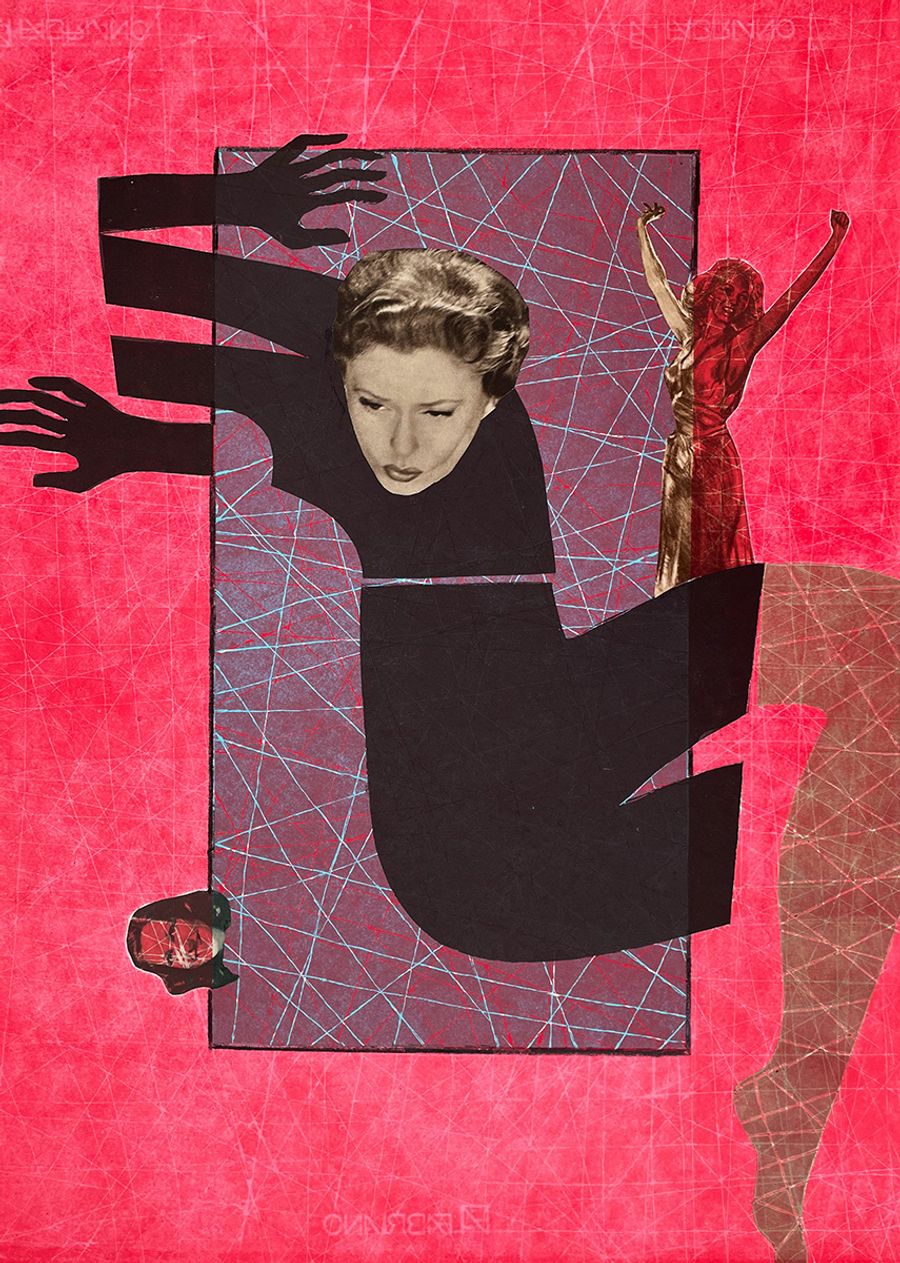
I cut the matrix for a torso first — no arms, no legs. Those I cut separately, so I could place them in different configurations: reaching in one direction, then another, sometimes absent entirely. The torso is inscribed in a rectangle. That rectangle is her place — the space from which she acts. And she acts in many directions at once.
The contrapposto of her body — that slight twist that suggests simultaneous movement in opposite directions — became the visual metaphor I was looking for. She is not multitasking as a choice. She is multitasking as a condition of her existence. The scratches on her ground, the violet rectangle she stands within, are not accidental marks. They are the record of what that condition costs.
And then there are the incisions. Sometimes cuts that go all the way through the torso. I sat with those for a long time before I decided to keep them — before I was certain they were right.
She is not whole in the conventional sense. Her base is fragile. The body carrying everything is itself carried by nothing, or by very little. And yet — she is full of energy, full of dynamism, and beautiful in her femininity.
The collaged faces I built into each work are there to say exactly that. Women from those same 1920s magazines, their expressions serene, their elegance intact. The beauty is not despite the fragility. It is inseparable from it.
The series grew to nine works. Each one carries the same elements: the violet rectangle, the red ground surrounding it, the black torso. In some works an arm is missing. A leg. In every title I wanted to say the same thing, from a different angle — that she is super. That the word, for all its weight, is also true.
But underneath every title, underneath the whole series, there is a question I kept returning to and never quite answered in paint.
Who carries her?
Not as accusation. As genuine wondering. The women in the magazines carried entire worlds inside a composed expression and a neat silhouette. The women I know carry comparable worlds inside ordinary weeks, ordinary mornings, the specific exhaustion of being present to everyone at once. I wanted to make work that saw that — that held it without resolving it, without offering false comfort or false critique.
A painting cannot answer the question. But it can hold it with enough honesty that the person standing in front of it feels, for a moment, genuinely seen.
That is what I was trying to make. Nine times, from nine angles, with red and black and violet and the fragile torso of a woman who remains, despite everything, standing.
Each work in the Superwoman series is a one-of-a-kind collage monotype, signed and accompanied by a certificate of authenticity, shipped directly from the studio in Boxholm, Sweden. If this resonated with you, I send occasional letters from the studio — the stories behind the work, and new pieces before they appear anywhere else.
Jolanta Johnsson
Polish-Swedish painter and printmaker, based in Boxholm, Sweden. Doctor of Fine Arts, Academy of Fine Arts, Kraków. Four decades of practice across oil, monotype, linocut, and sculpture. 2024 Alfred Nobel Memorial Art Scholarship.
Featured In This Article
Artworks
Continue Reading
More From the Studio
Sep 19
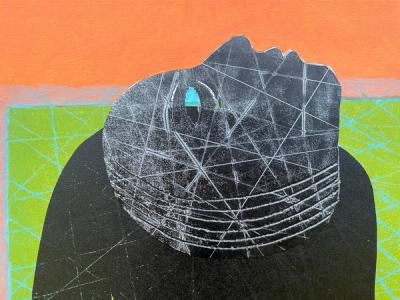
For years I titled my paintings the way you'd label a box: "Woman Sitting," "Landscape, Autumn." Then a gallerist told me, plainly, that I needed to do better — and sent me looking at Monet, Cézanne and the Dadaists to understand why a title is never just a label.
Sep 5
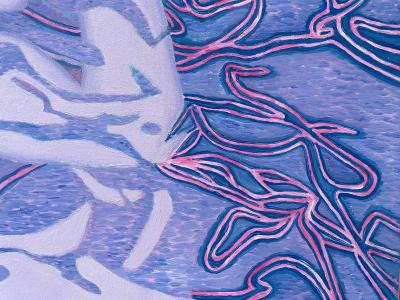
Can Color be a shelter?
A painting built from one question: can a colour become a place to hide inside? Jolanta Johnsson on making Pink as Shelter, the politics of pink, and the figure who chose the colour and made it her own.

Aug 21
An Angel, Not a Man
Do angels exist? Faith says one thing and science another — yet almost everyone would quietly like one of their own. A pen-and-ink drawing from 1997 about being held, and about the people we describe, in Polish, as an angel rather than a man.
Interested in Jolanta's work? Browse the gallery or get in touch.