September 5, 2026
Can Color be a shelter?
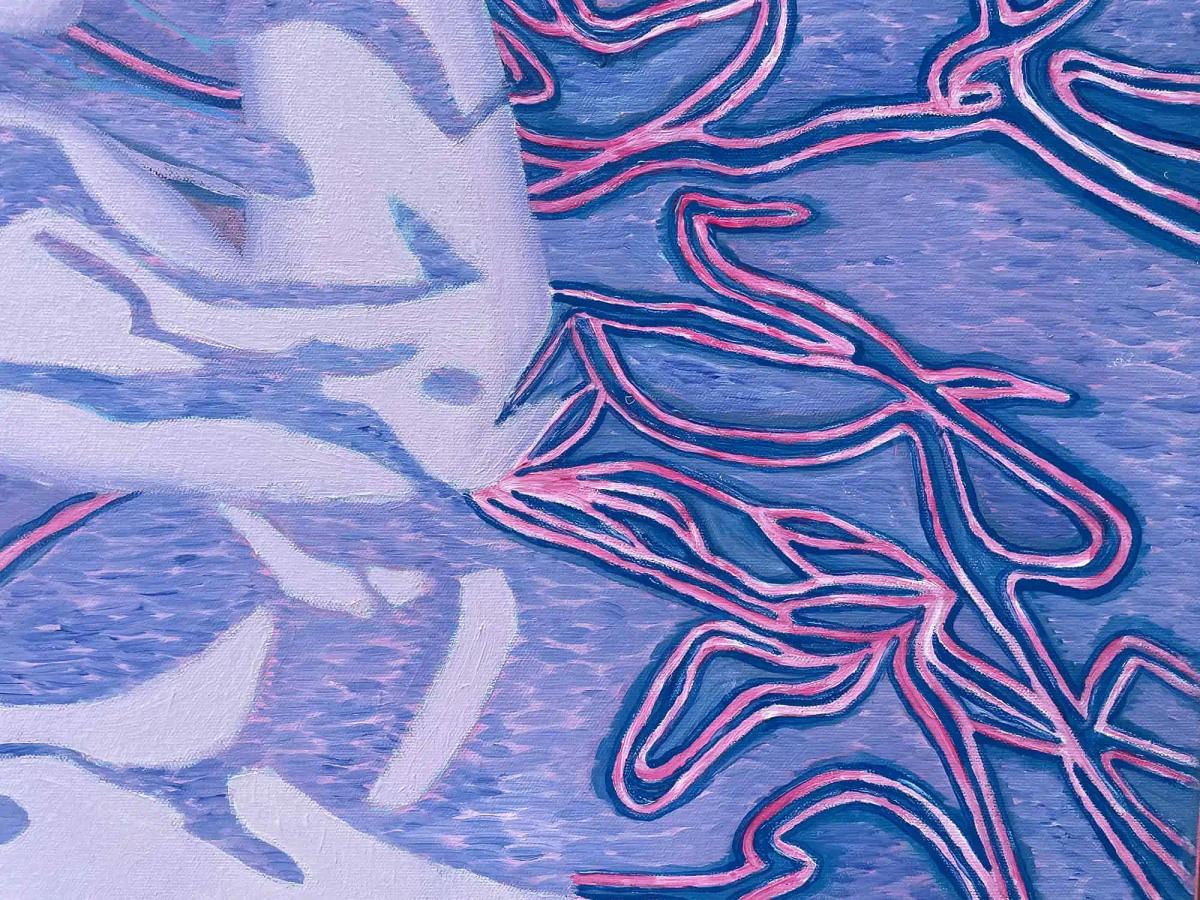
Can colour be a shelter?
On warm colours and cold ones, on the politics of pink, and the woman who found her refuge in a canvas I call Pink as Shelter.
Colour is inseparable from our lives. It surrounds us everywhere and reaches us in more ways than we usually stop to notice. Depending on culture, memory, context, and the person doing the looking, colour calls up different emotions and different associations.
Colour has the power to shape how we see — it summons feeling before it summons thought. It is commonly said that warm colours excite and energise, while cool ones bring harmony, balance, and quiet. That second pairing, harmony and quiet, belongs entirely to the place I think of as a shelter.
A shelter is a kind of asylum — somewhere we can feel safe enough to let our emotions settle. Somewhere we can stop, or sit down, and allow the body to be still.
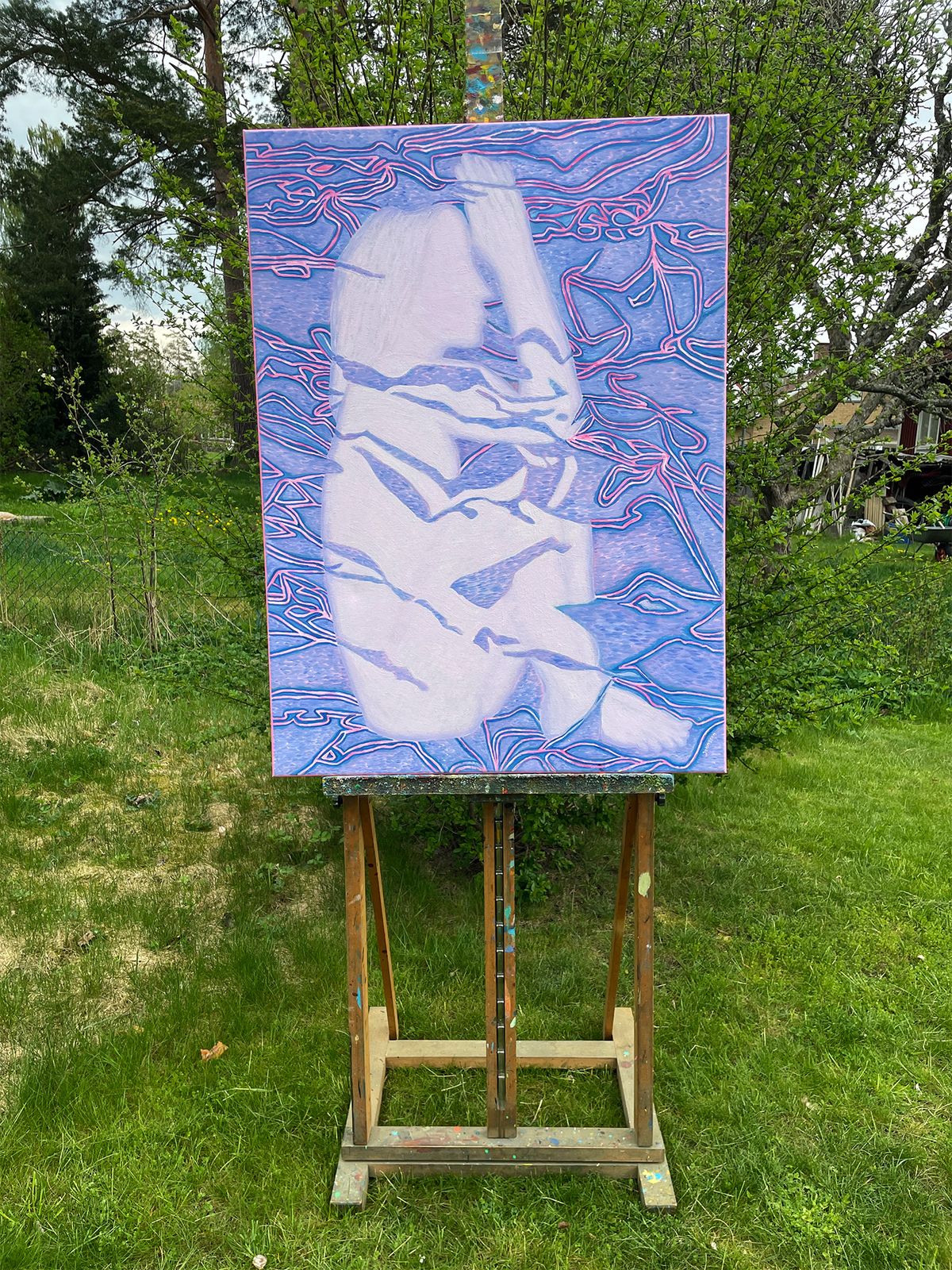
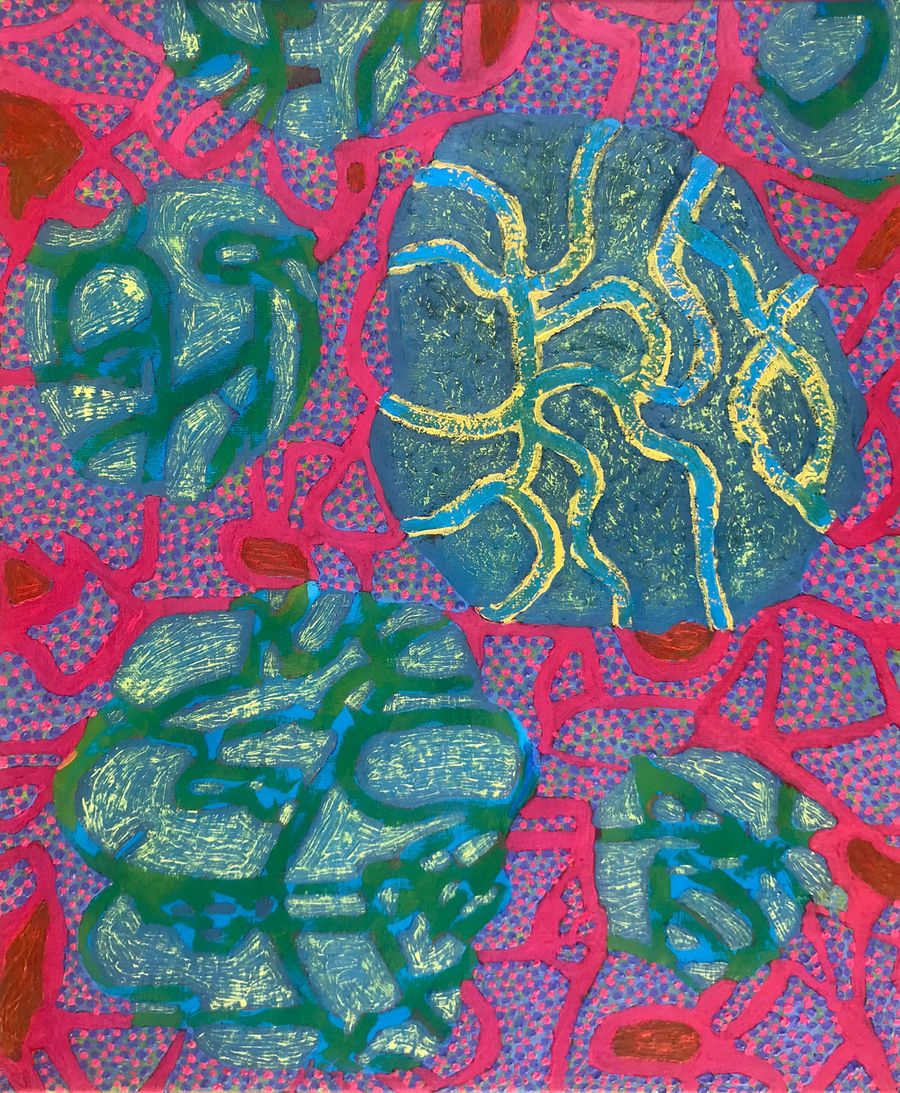
In my painting Pink as Shelter, that place is built out of pink.
Pink is made by mixing red with white. It is a weaker version of red — it keeps the warmth, but loses the heat and the intensity that belong to red alone.
It is in this colour that the woman in my painting finds her asylum. She sits with her knees drawn up to her chest, her hands folded over her knees. She is caught in stillness — perhaps she is even meditating.
Around her is a space built from fragments, torn shreds of matter, where blue bleeds into pink. I used a cold blue precisely so the pink would come forward — pink is what dominates here. The blue also passes into her body, blurring the details of her anatomy, turning her into something closer to an immaterial presence than a physical form. She has found her own space inside this colour, and she seems, I think, at peace there — as if she would like to stay. My painting holds that moment in place.
She chose the colour. And then she gave it her own meaning.
For decades, pink was treated as a sign of stereotypical femininity — of delicacy, of a softness and an infantility that were never chosen but imposed from outside. Today, feminist movements and movements for the rights of non-heteronormative people have reclaimed the colour for their own campaigns. That subversive use has given pink a new meaning.
The woman in my painting chooses pink for herself, and makes her own meaning of it. She arrived first inside my imagination, and then on the canvas — a figure as free in her decisions as the artist who painted her.
So the question I keep carrying around the studio is not really about pigment at all. It is this: can a colour become a place? I think this one did, for her, and possibly for me. I would be curious to know if it becomes one for you.
Oil and acrylic on canvas, 100 × 73 cm.
Featured In This Article
Artworks
Continue Reading
More From the Studio
Oct 20
Free Man on a Curve
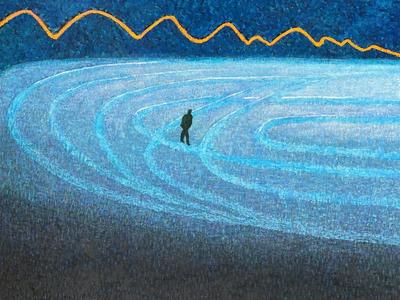
A song by Agnieszka Osiecka speaks of standing on a curve, where even the sky looks tilted. Every life has such moments. In Free Man on a Curve, a small figure stands where many roads branch off. He is free to choose, yet only from what he has been given, while the mountains watch in silence.
Sep 19
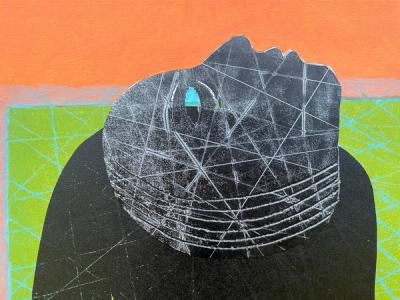
For years I titled my paintings the way you'd label a box: "Woman Sitting," "Landscape, Autumn." Then a gallerist told me, plainly, that I needed to do better — and sent me looking at Monet, Cézanne and the Dadaists to understand why a title is never just a label.
Aug 21
An Angel, Not a Man
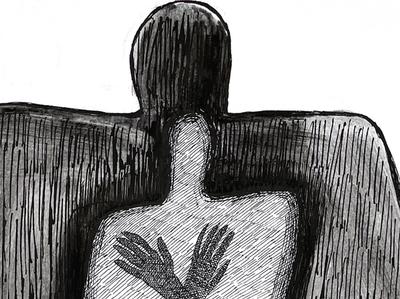
Do angels exist? Faith says one thing and science another — yet almost everyone would quietly like one of their own. A pen-and-ink drawing from 1997 about being held, and about the people we describe, in Polish, as an angel rather than a man.
Interested in Jolanta's work? Browse the gallery or get in touch.