November 3, 2026
Between
Between
On the space that opens between two figures — and the hands that reach across it.
The moment two forms appear in a picture, something else appears with them: the space between. It is never empty. It becomes part of the composition — sometimes its most important part.
In many of my paintings, prints and drawings, those forms are human figures. And when the space lies between two people, it carries an enormous emotional charge. I work with that charge deliberately. I place my figures side by side — standing, lying, sitting — and then I study the shape of what lies between them.
It is an irregular shape. Its edges are the outlines of the bodies: the head, the torso, the legs. And within it, there are the arms.
What the hands say
An arm can rest against the body, keeping to its own side. Or it can move outward and cut across the space with its form.
When the arm is extended and straight, the line it draws is straight too. One figure reaches toward the other with a decisive gesture.
When the arm leans out but stays slightly bent, it speaks of something else: wanting, yet hesitating. Perhaps the fear of being turned away.
Human hands hold countless meanings. Perhaps that is why it matters to me that I make my pictures with my own hands. Each time, I search for the right form — of the arms, the palms, the wrists, the fingers.
Between, in printmaking
For my printing plates I use the simplest materials: thick paper, pieces of plastic. I cut the shapes out with scissors — and I have come to notice that the movement of the scissors plays a role of its own.
Of course, I draw first, and then cut along the drawn line. Yet even as I cut, the urge to correct and change arises. The blades drift away from the drawing, and a slightly different shape is born.
Sometimes I catch myself guiding the scissors with great deliberation and focus — and still I could not explain, rationally, why I cut this way and not another. These are moments of unconscious action. And they are necessary: they are what turns the whole act into a creative one. A path into the unknown.
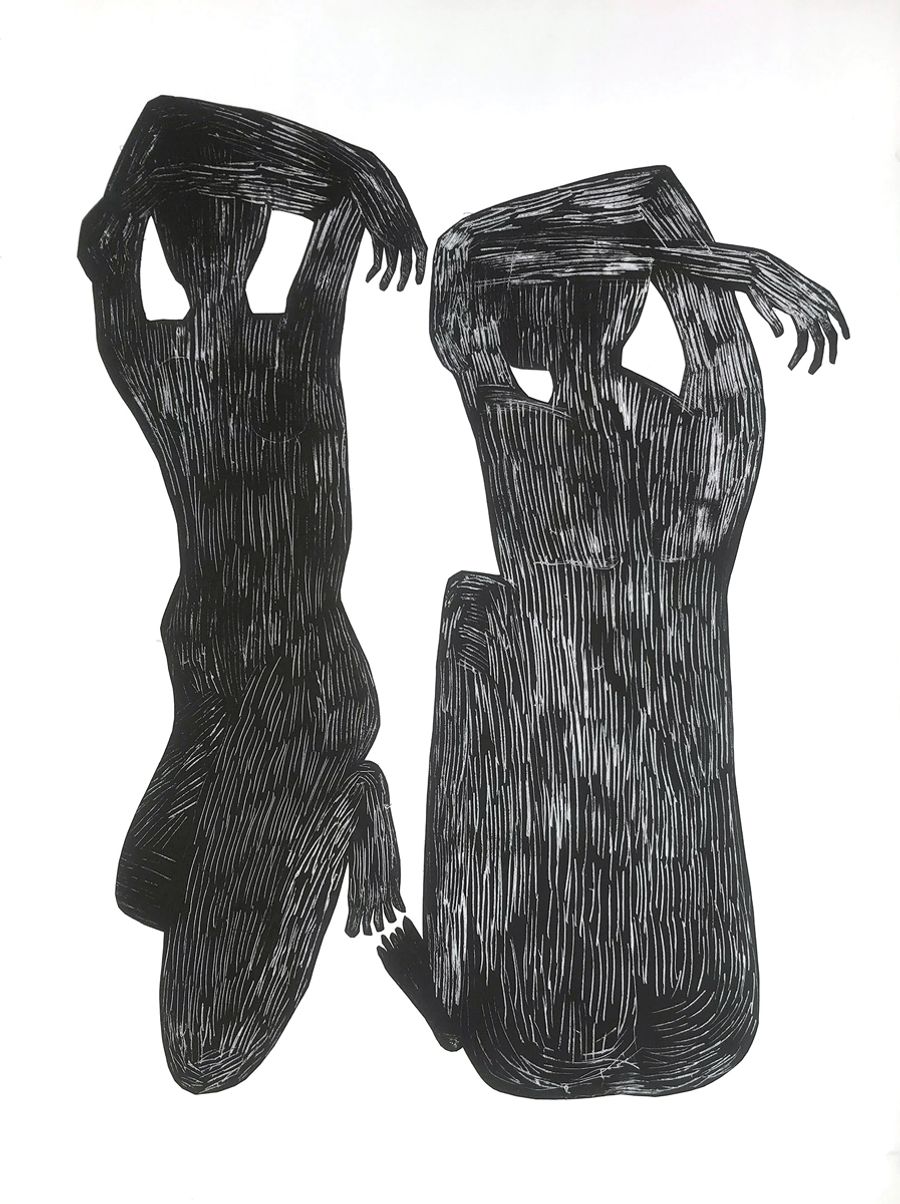
One of the prints born this way is Lovers Test. A man reaches toward a woman, but his hand stays suspended in the space between them — the reaching and the holding back in a single moment.
Between, in drawing
When I draw, there are no scissors. Most often I work with pen and ink — a technique that offers no way back. No line can be rubbed out.
So the space between is decided at the very start, the moment the two figures are drawn. Their shapes and the distance between them are set. What remains open is the character of their outlines. A single line? How thick? Or a figure filled with grey, deepened along its edge?
I weigh these values against one another, and slowly saturate the drawing with hatching, stroke after stroke of the pen. It is a truly absorbing kind of work — a sort of trance, or meditation.
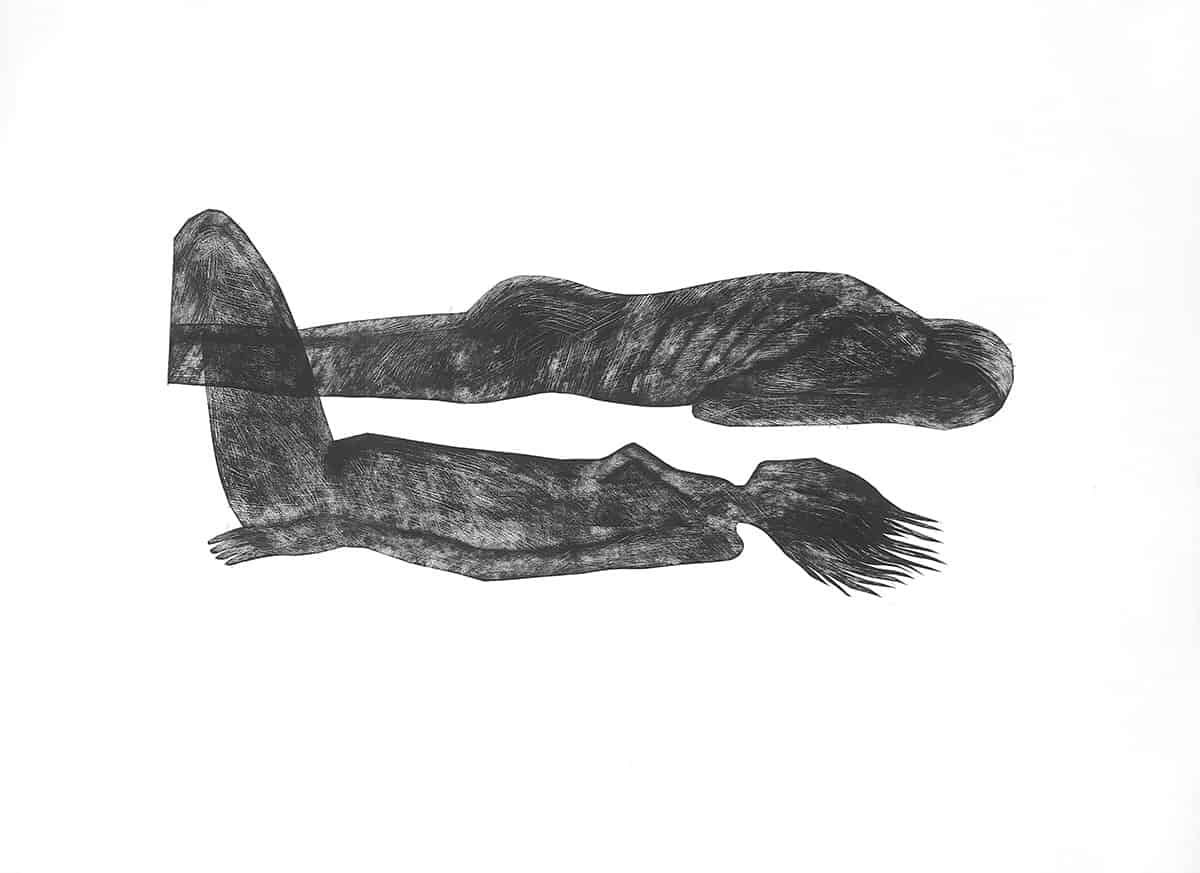
In Inbetweeners, drawn in ink, two bodies intertwine. The title points not to either figure, but to the space they make together.
Between a woman and a man
In my work, the space between opens most often between a man and a woman. In this I am not original. The intensity of emotion and feeling between these two halves of humanity has drawn artists of every discipline for centuries.
I don't feel I need to apologise for it. I found my place among those artists simply out of a need to express my own emotions.
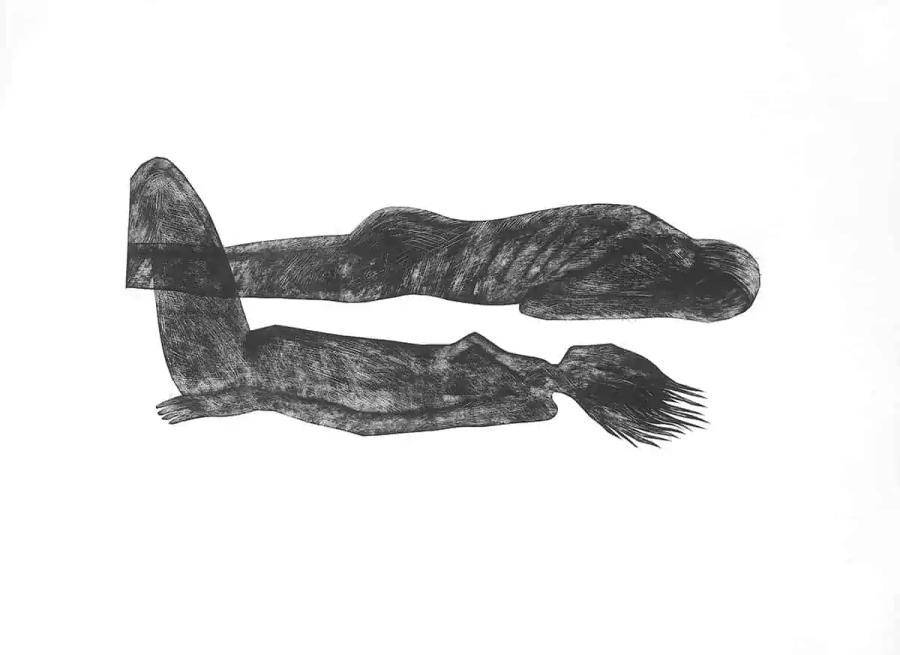
Perhaps that is why I keep returning to To Each Our Own, a print I made in 1998. A couple lies side by side, close, yet each with a world of their own. The space between them I left open — not as distance, but as room.
— Jolanta Johnsson
Now and then I write a letter from the studio — about the work in progress, the materials, and quiet decisions like these. You would be warmly welcome to receive it.
Featured In This Article
Artworks

Continue Reading
More From the Studio
Oct 20
Free Man on a Curve
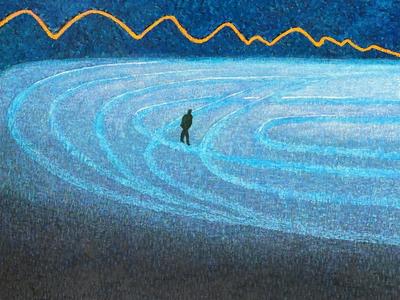
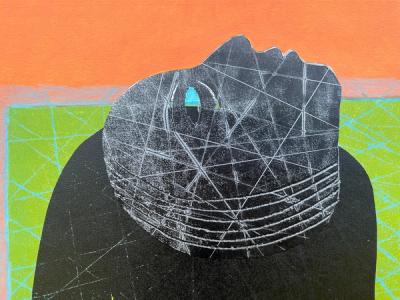
A song by Agnieszka Osiecka speaks of standing on a curve, where even the sky looks tilted. Every life has such moments. In Free Man on a Curve, a small figure stands where many roads branch off. He is free to choose, yet only from what he has been given, while the mountains watch in silence.
Sep 19
For years I titled my paintings the way you'd label a box: "Woman Sitting," "Landscape, Autumn." Then a gallerist told me, plainly, that I needed to do better — and sent me looking at Monet, Cézanne and the Dadaists to understand why a title is never just a label.
Sep 5
Can Color be a shelter?
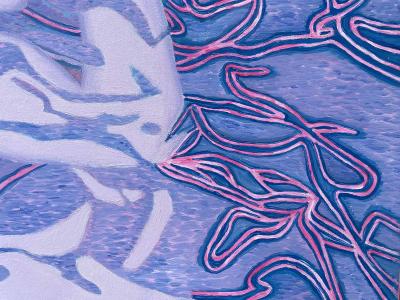
A painting built from one question: can a colour become a place to hide inside? Jolanta Johnsson on making Pink as Shelter, the politics of pink, and the figure who chose the colour and made it her own.
Interested in Jolanta's work? Browse the gallery or get in touch.