August 14, 2026
Should an Artist Write About Her Own Work?
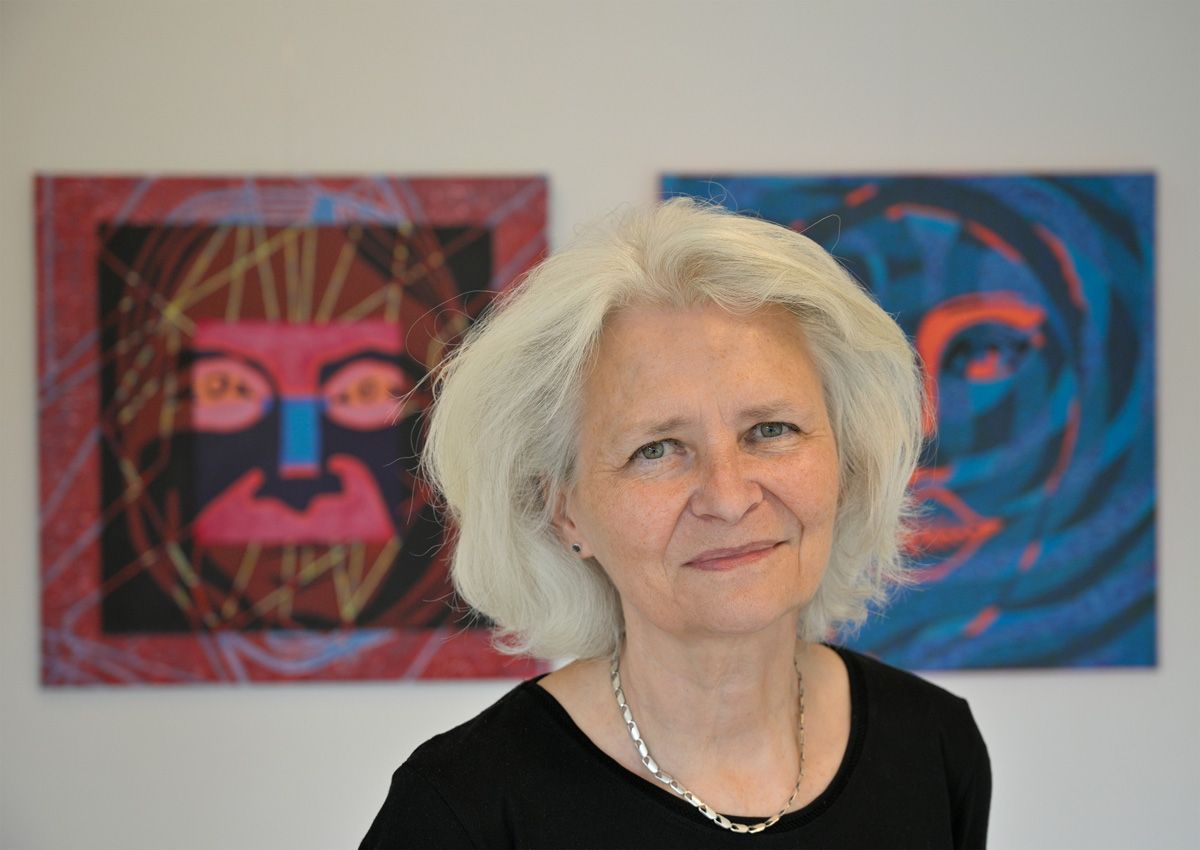
Should an Artist Write About Her Own Work?
Strictly speaking, she does not have to. She has already spoken — in the painting.
An image is a medium that does not merely replace words; it completes them. And often enough it holds something that cannot be put into words at all. That is not a failure of language. It is the reason painting exists.
And yet art is written about, constantly
Visual art is described and reviewed all the time, and the critic's profession is very much alive. I read writing about art with great interest — particularly the kind that carries not only the work but the person who made it. A text like that completes something for me: the picture of the tandem, the artist and his art.
I am always curious about the circumstances in which a work came into being. What stage of life the artist was in. What stood around him while he worked. With that, I can imagine the place and the hour, and how it happened that such astonishing things appeared.
Because this kind of information usually survives only about famous artists — often ones no longer among us — my imagination wanders through the studios of the masters. I listen for what they said. Many of them never troubled themselves to write about their work. But they spoke about it, and happily there were people who wrote it down.
So the history of visual art is written in words: by historians, by critics, and by artists.
Why the artist's own words matter now
My impression is that today an artist's own account of the work is not merely welcome but expected. Many galleries ask that a text accompany the image.
I think this has to do with the sheer supply of images that the internet and digital technology have made possible. The public is offered more than anyone can take in, and it is easy to become lost in it. A few words from the person who made the work can act like a hand held out — even to people who know art well and have formed their taste.
And the artist's text can carry something no one else has: information straight from that mysterious source, the studio and the act of making. In this one respect the artist has, at moments, an advantage over the critic. She can write what she knows, and what she has lived.
So my answer to the question is yes. It is worth writing about one's own paintings, and completing the expression with words as well.
What these letters are for
I will write from inside the studio: where a work began, what state a plate was in when I stopped cutting it, what I was looking at that year.
I will not explain my paintings — an explained painting is a closed one. I would rather set them beside the circumstances they came from, and leave the meaning where it belongs: with the person looking.
A letter from the studio, once a month — the stories behind the paintings, and first access to new works before they appear anywhere else.
Featured In This Article
Artworks
Continue Reading
More From the Studio
Oct 20
Free Man on a Curve
A song by Agnieszka Osiecka speaks of standing on a curve, where even the sky looks tilted. Every life has such moments. In Free Man on a Curve, a small figure stands where many roads branch off. He is free to choose, yet only from what he has been given, while the mountains watch in silence.
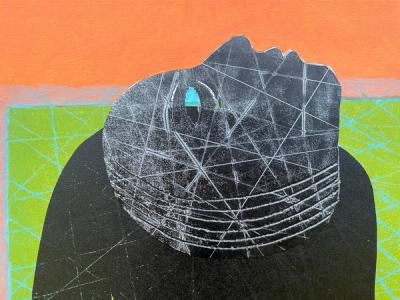
Sep 19
For years I titled my paintings the way you'd label a box: "Woman Sitting," "Landscape, Autumn." Then a gallerist told me, plainly, that I needed to do better — and sent me looking at Monet, Cézanne and the Dadaists to understand why a title is never just a label.
Sep 5
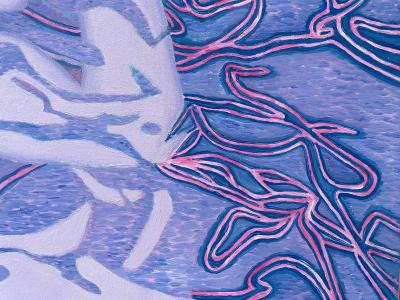
Can Color be a shelter?
A painting built from one question: can a colour become a place to hide inside? Jolanta Johnsson on making Pink as Shelter, the politics of pink, and the figure who chose the colour and made it her own.
Interested in Jolanta's work? Browse the gallery or get in touch.